반응형
Queue
: FIFO (First In First Out)
먼저 저장한 것을 먼저 꺼낸다.



- 은행 창구의 차례 대기열 등에서 사용됩니다.
- 데이터를 넣는 작업은 인큐 enqueue 라 하고, 데이터를 꺼내는 작업을 디큐 dequeue 라 합니다.
- 데이터를 꺼내는 쪽을 프런트 front , 데이터를 넣는 쪽을 리어 rear 라 합니다.
- 배열로 queue를 만든 코드(참고용, 실제로 Queue라는 데이터타입이 있으므로)
더보기
import java.util.Arrays;

public class IntAryQueue {
    private int max;    //queue size
    private int num;    //number of elements
    private int[] que;  //que array

    // Exception: Queue is empty
    public class EmptyQueueException extends RuntimeException {
        public EmptyQueueException() { }
    }

    // Exception: Queue is full
    public class overflowQueueException extends RuntimeException {
        public overflowQueueException() { }
    }

    public IntAryQueue() { }

    public IntAryQueue(int capacity) {
        num = 0;
        max = capacity;
        try {
            que = new int[max];
        }
        catch (OutOfMemoryError e) {
            max = 0;
        }
    }

    public int enque(int x) throws overflowQueueException{
        if (num >= max) {
            throw new overflowQueueException();
        }
        return que[num++] = x;
    }

    public int deque() throws EmptyQueueException {
        if (num <= 0) {
            throw new EmptyQueueException();
        }
        int dequeued = que[0];
        que = Arrays.copyOfRange(que, 1, max);
        num--;
        return dequeued;
    }

    public int peek() throws EmptyQueueException {
        if (num <= 0) {
            throw new EmptyQueueException();
        }
        return que[max];
    }

    public int indexOf(int x) {
        for (int i = num - 1; i >= 0; i--) {    // Search from top
            if (que[i] == x) {
                return i;
            }
        }
        return -1;                              // x not found
    }

    public void clear() {
        num = 0;
    }

    public int capacity() {
        return max;
    }

    public int size() {
        return num;
    }

    public boolean isEmpty() {
        return num <= 0;
    }

    public boolean isFull() {
        return num >= max;
    }

    public void dump() {
        if (num <= 0) {
            System.out.println("Stack is empty.");
        }
        else {
            for (int i = 0; i < num; i++) {
                System.out.print(que[i] + " ");
            }
            System.out.println();
        }
    }

}
LinkedList
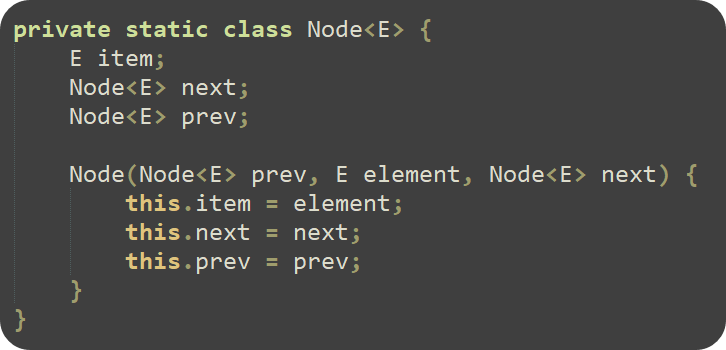
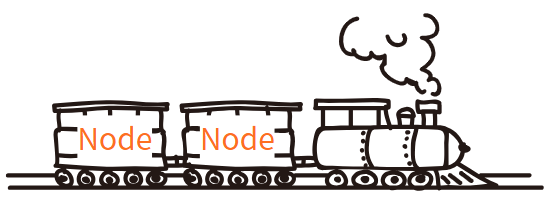
- 데이터들을 Node라는 곳에 담아 하나씩 기차처럼 연결한다.
→ 노의의 위치를 연결된 양 옆의 노드들만 안다. - 데이터를 삭제할 때 배열처럼 덮어씌우는 게 아니라 연결만 바꾼다.
- 추가할 때도 새로운 노드를 만들어 연결만 해주면 된다.
※ 장점 : 새로운 데이터 추가/삭제가 빠르다.
※ 단점 : 접근성. 데이터를 가져오는 속도가 느리다.
따라서 중간에 값을 추가/삭제할 경우에는 LinkedList가 좋다. 그렇지 않은 경우 ArrayList가 좋다.
사용법은 ArrayList와 거의 일치합니다.

ArrayList 메서드2024.11.19 - [☕ 자바 JAVA/☕ 변수와 자료형 Variables & Data Type] - [JAVA]ArraList
반응형
'☕ JAVA > ☕ Variables & Data Type' 카테고리의 다른 글
| [JAVA]Iterator, ListIterator, Enumeration (0) | 2024.11.21 |
|---|---|
| [JAVA]NaN과 Infinity (0) | 2024.11.21 |
| [JAVA]NULL (0) | 2024.11.19 |
| [JAVA]ArraList (0) | 2024.11.19 |
| [JAVA]Vector란? (0) | 2024.11.18 |